A city in motion: Placemaking, identity, and public art.
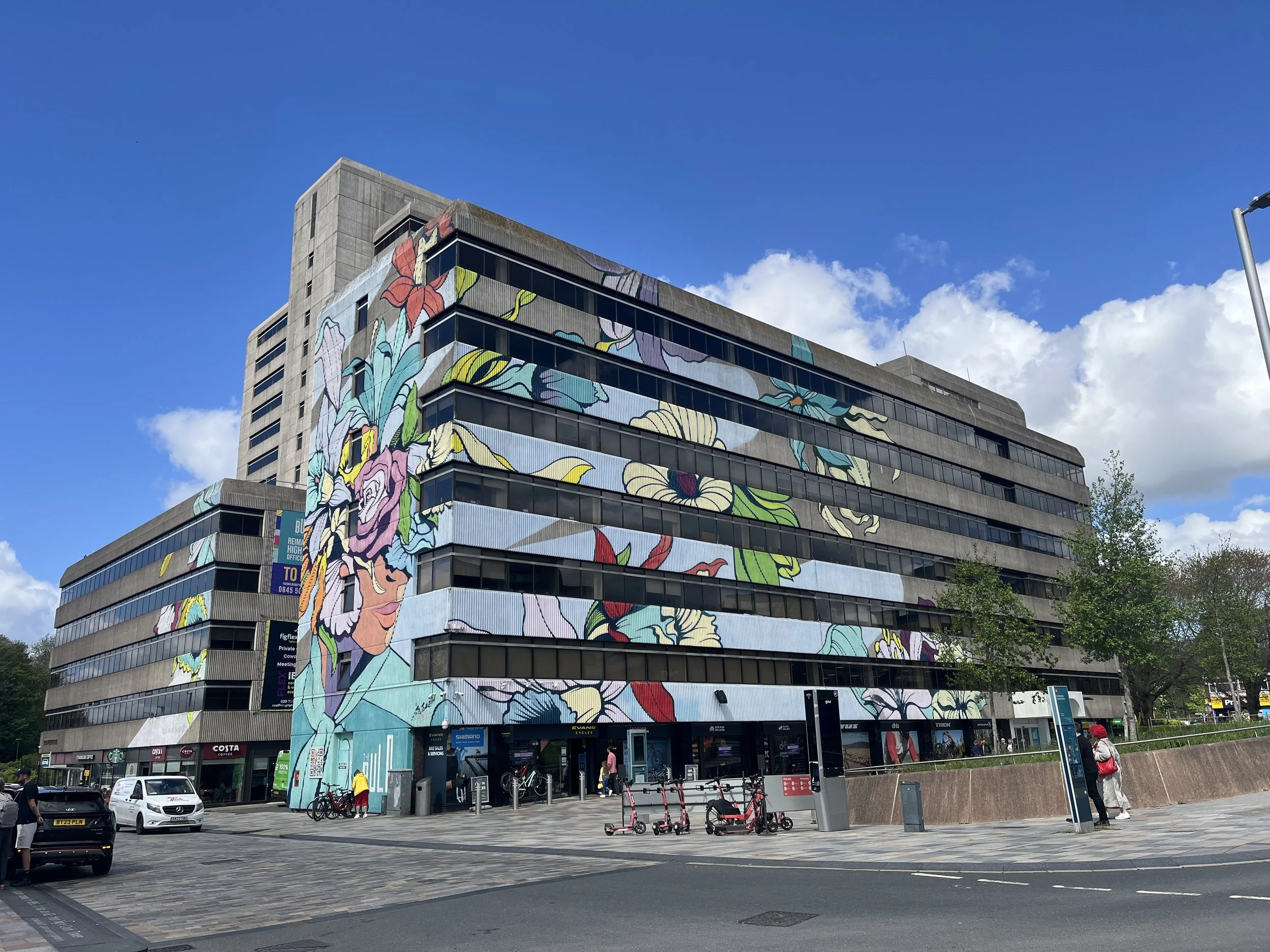
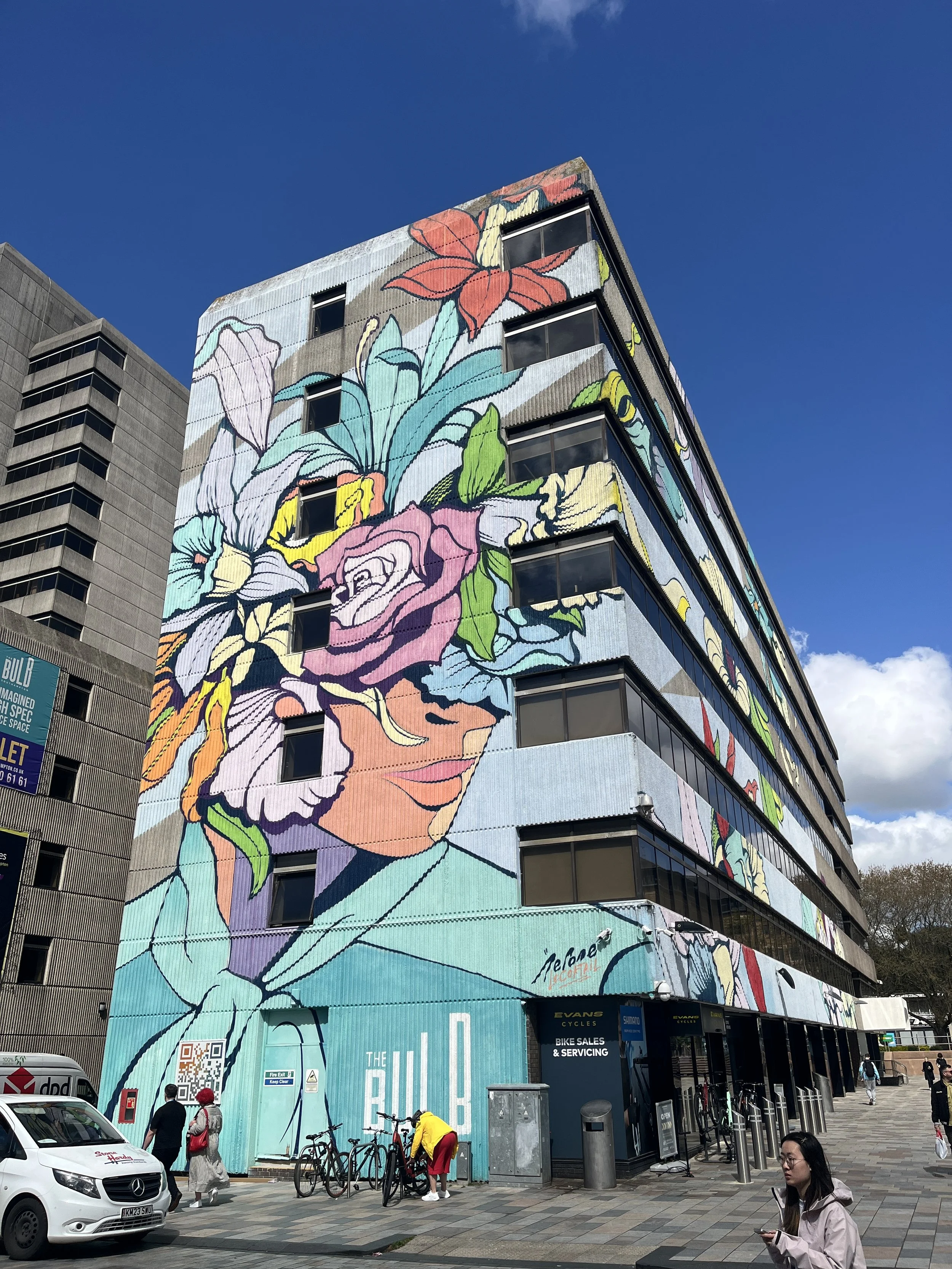
Public art can completely change the way people experience and understand a city, and around Southampton Central Station, French mural artist, Nerone has transformed what could otherwise be viewed as just another busy transport hub into something far more recognisable, memorable, and connected to the identity of the city itself.
Southampton is a city shaped by movement, with a long history built on shipbuilding, trade, and transport. Because of this, the station acts as one of the main gateways into the city, used daily by commuters, students, tourists, and residents.
Adding a huge splash of colour and vibrancy, Nerone has transformed a concrete building into the UK’s largest clean air mural, immediately changing the atmosphere of the area. The 1,005 square metre artwork was created using Graphenstone CO₂-absorbing paint, designed to help absorb pollution from the surrounding environment.
The mural does far more than simply decorate the building, as its large floral forms and bright colours soften the harsh architecture surrounding the station and create an environment that feels more welcoming, modern, and engaging for the public.
Rather than arriving into a grey and purely functional urban space designed only for movement and routine, visitors are instead greeted with artwork that introduces creativity and energy into the environment, helping Southampton present itself as a city that values culture, public space, and visual identity.
The scale of the mural also encourages people to interact with the space around them in ways they may not otherwise have done, with many stopping to photograph the artwork, look more closely at the details, or simply become more aware of their surroundings while moving through the station.
The environmental message behind the mural is equally important, particularly because Southampton has repeatedly been identified as one of Europe’s most polluted port cities due to emissions produced by shipping and cruise liners operating through the port.
By creating the mural using pollution-absorbing paint, the artwork becomes more than a visual feature and instead acts as a response to environmental concerns within the city itself, combining public art with sustainability in a way that reflects wider discussions around air quality and urban health.
This gives the mural a deeper purpose, as it not only improves the appearance of the station area but also raises awareness of issues affecting Southampton while symbolically contributing towards cleaner public spaces.
With its roots in street art, public art often reflects the culture, identity, and concerns of the people living within a city, and unlike artwork confined to galleries or museums, murals such as this exist within everyday public spaces where they can be experienced by everyone regardless of background or circumstance.
In Southampton, the mural contributes to place making by turning an ordinary urban environment into something visually distinctive and emotionally engaging, while also reinforcing the idea of Southampton as a city that is constantly evolving, creative, and shaped by movement.
By bringing together colour, identity, environmental awareness, and public interaction, the mural becomes part of the city’s image and helps create a stronger and far more memorable first impression for anyone arriving in Southampton.