The importance of shared green space: Growing connections for newcomer and refugee women
For many newcomer women settling in rural areas, the landscape can feel unfamiliar, quiet lanes, few meeting places, and social networks that are still forming. But in places like Wild Roots community garden in Somerset, shared green space becomes a powerful site of connection, care, and belonging. Gardens aren’t just for growing vegetables; they become shared ground where people meet, learn, and plant the seeds of community together.
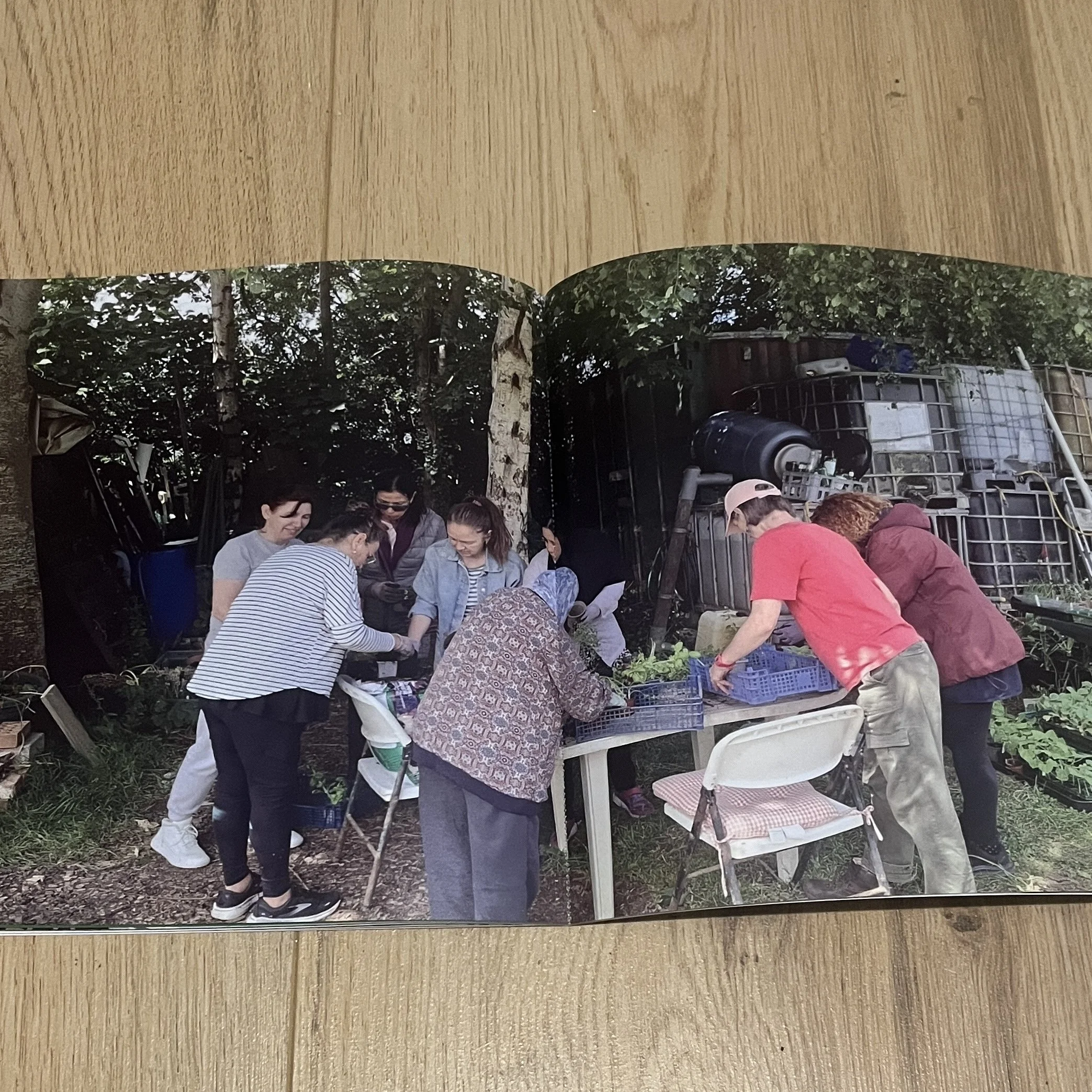
Community gardens transform land into living spaces of interaction. At Wild Roots, volunteers gather weekly to learn horticultural skills and rural crafts in a welcoming setting - from digging and planting to sharing a cuppa by the poly tunnel. For refugee women, these simple acts - tending soil, watering seedlings, pausing for conversation - become ways of feeling at home in a new environment.
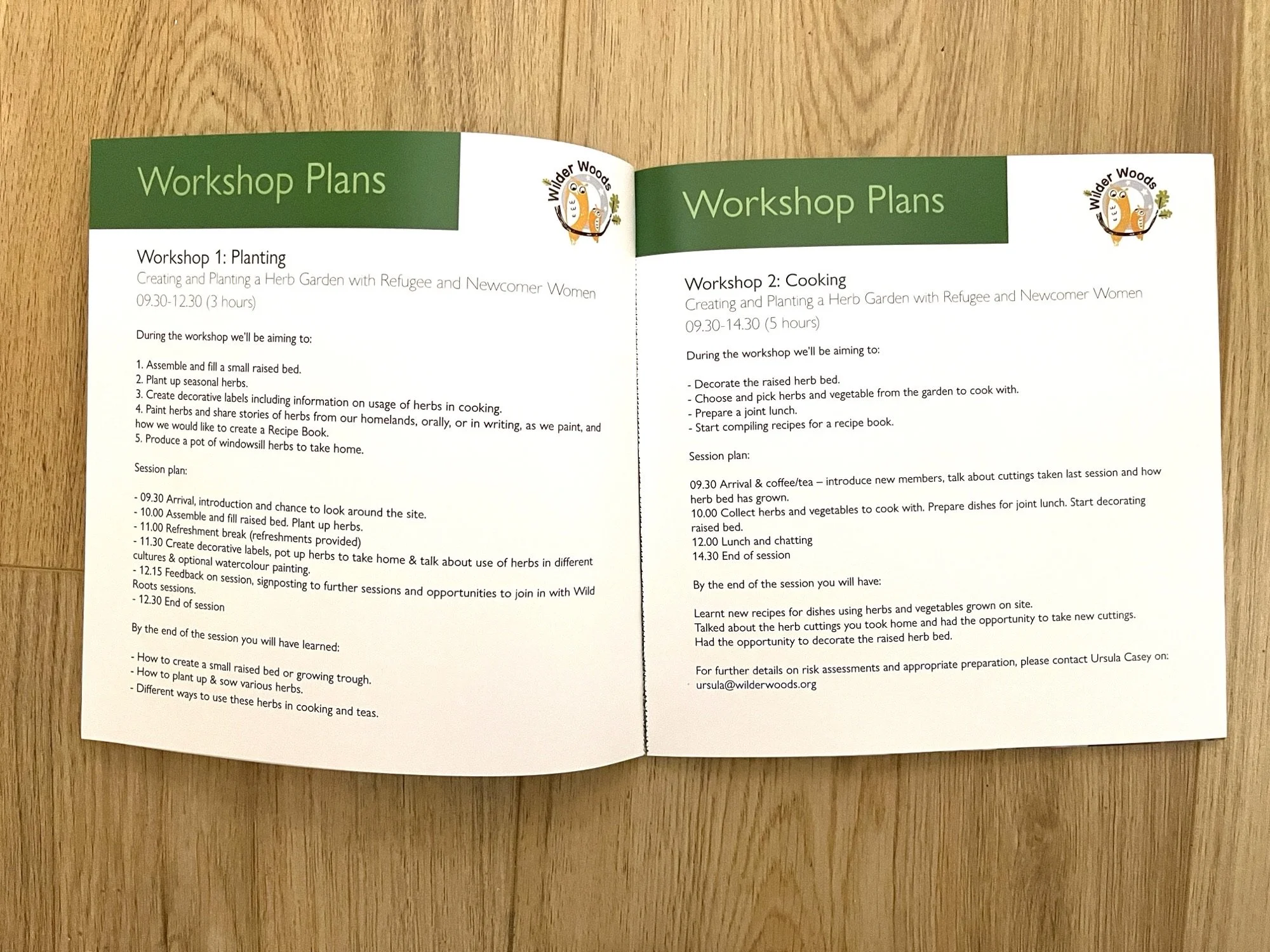
The Arts Council England: Standing With You workshop in June 2025, based at Wild Roots, added another layer to this work. Drawing on participants’ histories and cultural traditions, the workshop used culinary storytelling to build connection: women brought recipes, techniques, and stories from home. Together they cooked, shared food, and reflected on what they had learned, creating a bridge between their past lives and their new surroundings. By combining gardening and culinary practice, Wild Roots and the workshop provided both physical and social grounding, giving newcomer women tangible anchors in community and place.
What emerges from this combination of green space and participatory workshop is a network of everyday connection. Repeated acts - watering, planting, chopping, tasting, walking together - build trust, familiarity, and belonging. Over time, the garden becomes more than functional; it becomes a place of care, resilience, and recognition. Refugee women move from the periphery of community life toward its centre, not through programmes alone, but through presence, shared experience, and collective care.
Community gardens and creative workshops complement each other beautifully. Gardens offer physical grounding - a place to be outdoors, grow, and witness the seasons change. Culinary workshops offer cultural and social grounding, a space to share stories, cook, and pass on knowledge. Together, they provide newcomer women with tools, relationships, and confidence to feel part of the place they now live in.
In cultivating soil and stories alike, participants plant more than seeds, they cultivate belonging.
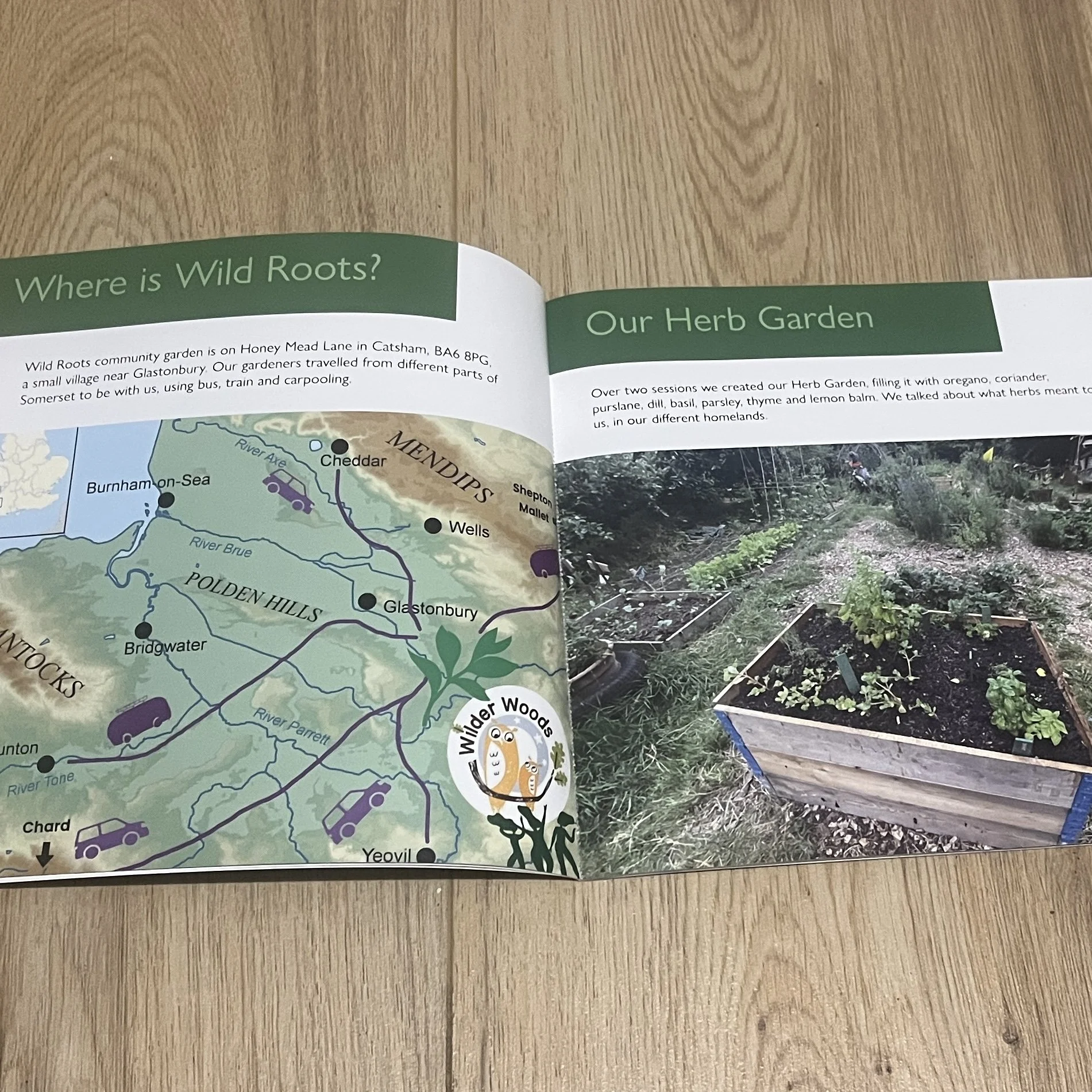
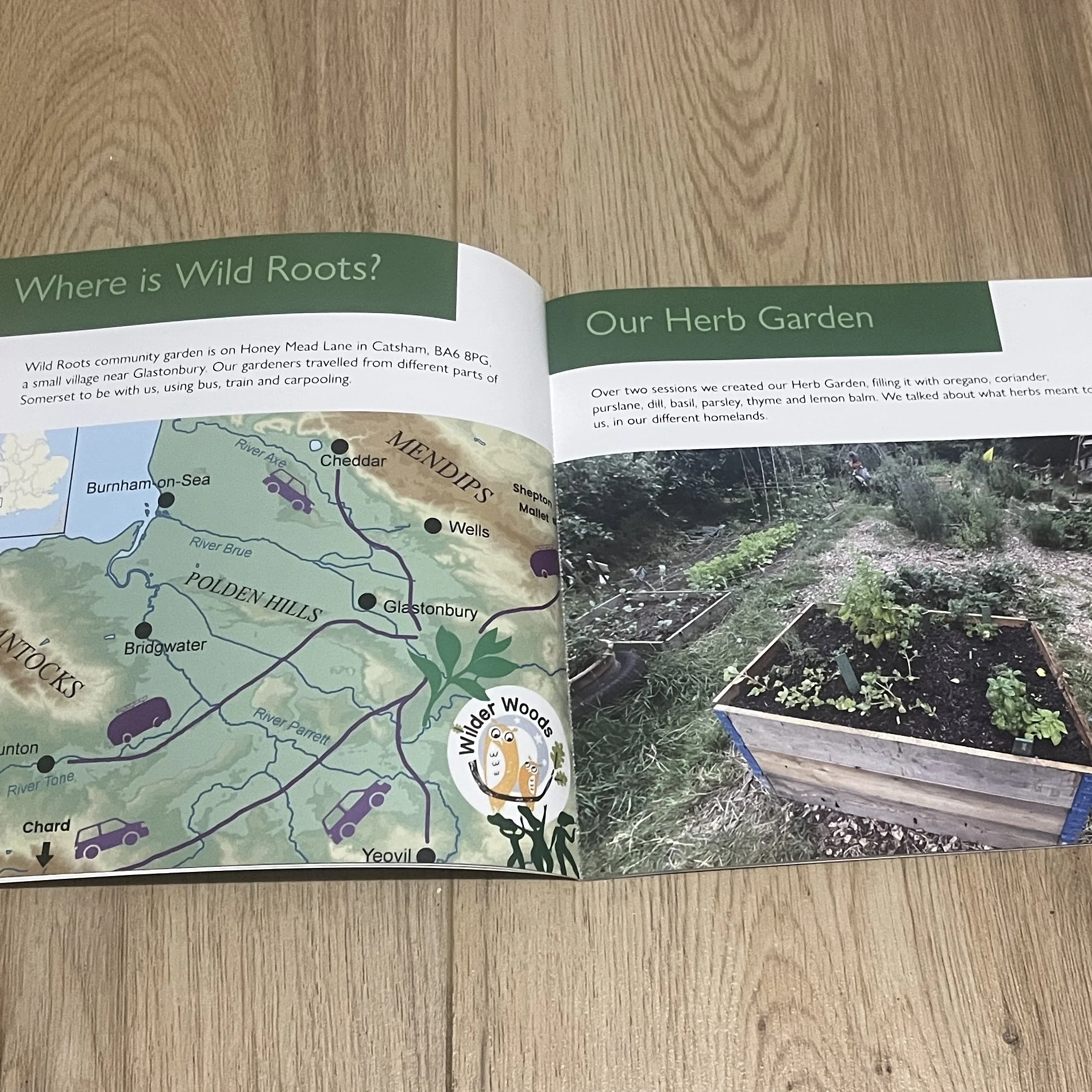
Wild Roots is a community garden near Glastonbury, Somerset.